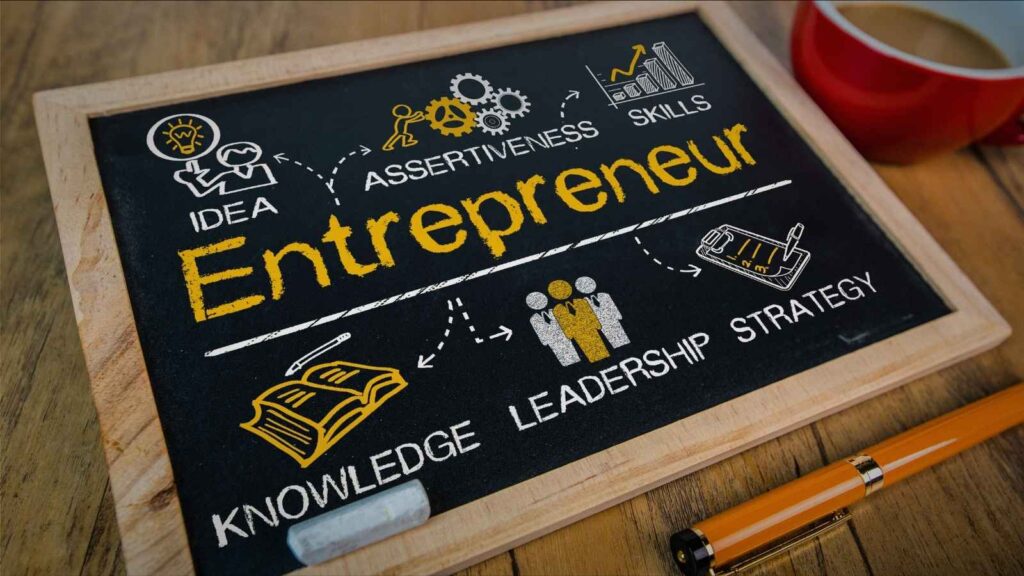
Entrepreneur Motivation for Founders
Building a business requires more than a strong idea. Founders also need the motivation to keep making decisions, solving problems, learning from setbacks, and moving forward when progress is slower than expected.
Entrepreneur motivation is not about feeling inspired every day. It is about having enough purpose, direction, discipline, and resilience to continue taking meaningful action when running a business becomes difficult.
For founders, motivation can come from different sources. Some are driven by the problem they want to solve. Others value independence, professional growth, innovation, financial opportunity, or the impact their work can create. Research into entrepreneurial motivation also shows that people can have multiple motivations at different stages of their entrepreneurial journey.
The challenge is not simply finding motivation once. It is learning how to sustain it as responsibilities, uncertainty, competition, and business challenges increase.
This guide explores what motivates entrepreneurs, why founder motivation can decline, and practical ways to maintain momentum over the long term.
Entrepreneur Motivation at a Glance
Successful entrepreneurship does not depend on constant inspiration.
Founders can sustain motivation by connecting their work to a meaningful purpose, setting measurable goals, tracking progress, building supportive relationships, continuing to learn, and developing routines that make consistent action easier.
The key is to create a system that helps you move forward even on days when motivation is low.
What Is Entrepreneur Motivation?
Entrepreneur motivation is the combination of internal and external reasons that encourage a person to start, build, manage, and continumotivation entrepreneur e developing a business.
It can include:
- The desire to solve a meaningful problem
- Independence and decision-making freedom
- Professional achievement
- Business growth
- Financial opportunity
- Personal development
- Innovation and creativity
- Social or community impact
- The desire to build something of their own
Importantly, motivation is not the same for every entrepreneur.
A founder may begin a business because of independence but later become more motivated by customer impact. Another may start with a financial goal and later find greater motivation in building a team or solving a difficult industry problem.
Entrepreneurial motivation can therefore change as the business develops.
Why Do Entrepreneurs Lose Motivation?
Starting a business can be exciting. Maintaining that energy over several years is much harder.
Founder motivation can decline for several practical reasons.
1. Progress Becomes Difficult to See
Business growth is rarely linear. A founder may spend weeks working on a product, marketing campaign, sales strategy, or operational improvement without seeing an immediate result.
When effort and visible progress become disconnected, motivation can fall.
2. Decision Fatigue Builds Up
Founders often make decisions across multiple areas of a business, from hiring and finance to customers, marketing, technology, and operations.
Constant decision-making can make even simple tasks feel difficult.
3. Business Uncertainty Increases
Revenue fluctuations, changing customer expectations, competition, economic conditions, and unexpected operational problems can create uncertainty.
A founder may remain committed to the business while still questioning whether the current approach will work.
4. The Founder Becomes Isolated
Entrepreneurship can sometimes become a lonely experience, particularly when a founder feels unable to discuss business challenges openly with employees, friends, or family.
A lack of constructive feedback can make problems feel larger than they are.
5. The Original Purpose Gets Lost
As a company grows, founders often become occupied with meetings, administration, hiring, targets, deadlines, and daily operations.
The original reason for starting the business can become less visible.
6. Setbacks Become Personal
A failed launch, lost customer, rejected proposal, or missed target can feel like a judgment on the founder rather than simply a business outcome.
Separating personal identity from business results can help founders assess problems more objectively.
How Do Entrepreneurs Stay Motivated Long-Term?
Long-term motivation usually needs more than positive thinking.
It requires practical systems that turn a large and uncertain business journey into smaller, manageable actions.
Here are seven approaches founders can use.
7 Ways Founders Can Stay Motivated Long-Term
1. Reconnect With Your Purpose
Ask a simple question:
Why did I start this business in the first place?
The answer should go deeper than revenue.
Perhaps the company exists to solve a customer problem, improve an industry process, create employment, introduce a better product, or give the founder the freedom to build something meaningful.
When daily work becomes overwhelming, reconnecting with that purpose can provide direction.
Purpose does not eliminate business problems. It can help founders remember why solving those problems matters.
2. Set Smaller, Measurable Goals
A large business goal can feel distant.
Instead of focusing only on annual revenue or long-term growth, break the objective into smaller milestones.
For example:
- Complete the next product improvement
- Reach a specific number of qualified leads
- Improve customer retention
- Build one important partnership
- Complete a hiring milestone
- Publish a new piece of thought leadership
Small achievements create visible evidence of progress.
That evidence matters because founders need to see that their effort is producing movement.
3. Track Progress Beyond Revenue
Revenue is important, but it is not the only measure of progress.
A founder can also track:
- Customer satisfaction
- Repeat business
- Product improvements
- Qualified leads
- Team growth
- Operational efficiency
- New partnerships
- Customer feedback
- Brand visibility
- Skills developed
A broader definition of progress can help founders recognise improvements that may not immediately appear in financial results.
4. Build a Strong Support Network
Founders do not have to solve every problem alone.
Peers, mentors, advisors, professional networks, and experienced business leaders can provide different perspectives.
Research on entrepreneurial resilience has also highlighted the importance of activities such as networking, mentoring, training, and seeking objective feedback when entrepreneurs face difficult conditions.
The right network does not simply provide encouragement. It can help a founder see a problem from another angle and make better-informed decisions.
5. Reduce Decision Fatigue
Not every decision deserves the same amount of attention.
Founders can reduce unnecessary mental pressure by:
- Creating repeatable processes
- Delegating appropriate responsibilities
- Using clear decision criteria
- Creating standard operating procedures
- Planning priorities in advance
- Protecting time for important strategic decisions
The goal is not to eliminate decisions.
It is to reserve the founder’s attention for decisions that genuinely require it.
6. Learn From Setbacks
A setback can either become a source of discouragement or a source of information.
When something fails, ask:
What happened?
What was within our control?
What did we learn?
What should we change next time?
This approach shifts attention from self-criticism to problem-solving.
Research on entrepreneurial resilience has found that resourcefulness and the ability to adapt can be important factors in how entrepreneurs deal with uncertain and challenging environments.
7. Protect Time for Recovery and Reflection
Constant work does not automatically produce better entrepreneurship.
Founders need time to step away from immediate tasks, review what is happening, and think about what should happen next.
Recovery can include:
- Time away from work
- Exercise or other physical activity
- Family time
- Hobbies
- Quiet thinking time
- Reading and learning
- Reviewing goals without daily distractions
The objective is not to work less simply for the sake of working less.
It is to create enough space to return to important decisions with greater clarity.
The Founder Motivation Framework
Motivation becomes easier to understand when it is viewed as a system rather than a feeling.
Frontsources can look at founder motivation through six connected drivers:
1) Purpose
Why does the work matter?
Purpose gives the founder a reason to continue when the immediate rewards are limited.
2) Progress
What evidence shows that the business is moving forward?
Visible progress turns effort into something measurable.
3) Autonomy
How much control does the founder have over meaningful decisions?
Independence is one of the motivations associated with entrepreneurship, although running a business also brings responsibility and uncertainty.
4) Mastery
What is the founder learning or becoming better at?
Business building creates continuous opportunities to develop new skills.
5) Support
Who can provide perspective, feedback, or encouragement?
Strong professional relationships can make difficult periods easier to navigate.
6) Recovery
How does the founder create space to think, reset, and return with clarity?
Long-term entrepreneurship requires more than constant activity.
Together, these six elements create a practical framework:
Purpose → Progress → Autonomy → Mastery → Support → Recovery
When motivation drops, founders can use the framework to identify what is missing.
Perhaps the purpose is unclear.
Perhaps progress is not being measured.
Perhaps the founder needs better support.
Or perhaps there has simply been no time for recovery.
Motivation vs Discipline: What Keeps Founders Moving?
Motivation and discipline are related, but they are not the same.
Motivation creates the desire to act. Discipline helps maintain action when that desire changes.
| Motivation | Discipline |
|---|---|
| Can fluctuate | Creates consistency |
| Often connected to enthusiasm | Relies on routines and commitments |
| Can provide initial momentum | Helps maintain momentum |
| Strong when the goal feels exciting | Remains useful when the work becomes repetitive |
This is why founders should not build their entire business routine around feeling motivated.
A founder may feel highly motivated when launching a new product. Six months later, the same person may be dealing with repetitive operational tasks.
The business still needs to move forward.
Systems, habits, priorities, and accountability can help bridge the gap between wanting to act and actually acting.
A Real-World Example of Purpose-Driven Leadership
Lance A. Slatton
Entrepreneurial motivation does not always have to be viewed through financial growth or company expansion.
Professional purpose and industry impact can also become important parts of a person’s journey.
Frontsources featured Lance A. Slatton as the Top Senior Care & Healthcare Influencer of 2026, highlighting his professional journey, leadership, contributions, and work at the intersection of healthcare, senior care, and advocacy.
His 14-page Frontsources digital feature provides a documented example of how professional influence can extend beyond an individual’s immediate role and connect with a broader industry and community.
For founders, the broader lesson is important:
A strong business purpose can give professional work meaning beyond short-term results.
The goal is not to copy another person’s path. Every founder operates in a different industry and environment.
Instead, founders can ask themselves:
What larger problem does my work help solve?
Who benefits from the business I am building?
What would make this journey meaningful even beyond financial success?
Those questions can help bring the original purpose of a business back into focus.
How Can Founders Stay Motivated After Business Failure?
Failure can be particularly difficult for founders because business outcomes can feel closely connected to personal identity.
A better response is to separate the event from the person.
A failed product does not automatically mean the founder is a failure.
A lost customer does not mean the entire business model is wrong.
A missed target does not mean future targets cannot be achieved.
Instead, review the situation objectively.
Identify the actual failure
Was the problem the product, pricing, timing, marketing, execution, customer demand, or something else?
Separate facts from assumptions
Look at customer feedback, sales data, costs, timelines, and other available evidence.
Identify what can be changed
Some factors are outside the founder’s control. Others can be improved.
Take one corrective action
Do not attempt to solve everything at once.
Choose the next practical step.
Record the lesson
A setback becomes more valuable when the business changes because of what was learned.
Resilience does not mean pretending that failure does not hurt.
It means using difficult experiences as information for the next decision.
What Should an Entrepreneur Do When They Feel Like Quitting?
When motivation reaches a low point, the first step does not have to be making a major business decision.
Start by identifying why you want to quit.
Is the problem:
- Financial pressure?
- Lack of customers?
- Excessive workload?
- Team problems?
- Lack of progress?
- Loss of interest?
- Unclear direction?
- Repeated setbacks?
Different problems require different solutions.
A founder who is exhausted may need recovery and delegation.
A founder facing poor customer demand may need to revisit the business model.
A founder who has lost sight of purpose may need to reconnect with the reason behind the business.
The important point is to identify the actual problem before deciding what to do about it.
A Practical Founder Motivation Reset
When motivation feels low, a simple seven-day reset can help create movement.
Day 1: Write down why the business exists.
Day 2: Identify one measurable business goal.
Day 3: List three recent signs of progress.
Day 4: Speak with one trusted peer, mentor, or advisor.
Day 5: Identify one problem that needs a different approach.
Day 6: Remove or delegate one unnecessary task.
Day 7: Review the week and decide on the next three priorities.
The purpose is not to manufacture instant enthusiasm.
It is to replace uncertainty with clarity and inactivity with one manageable step at a time.
Key Takeaways for Founders
Entrepreneur motivation is not a permanent state.
It changes with business conditions, responsibilities, setbacks, achievements, and personal circumstances.
Founders can build stronger long-term motivation by:
- Staying connected to their purpose
- Breaking large goals into measurable milestones
- Tracking progress beyond revenue
- Building supportive professional relationships
- Reducing unnecessary decision-making
- Learning from setbacks
- Protecting time for recovery and reflection
- Developing discipline and repeatable routines
The strongest motivation strategy is rarely about finding another inspirational quote.
It is about building a business journey where purpose, progress, learning, support, and disciplined action work together.
Final Thought
Building a company is not a straight line from idea to success.
There are periods of excitement, uncertainty, progress, repetition, setbacks, and change.
The founders who understand their own sources of motivation can build systems around them rather than waiting for inspiration to return.
Purpose provides direction. Progress provides evidence. Discipline provides consistency. Resilience provides the ability to continue learning.
Together, they can help founders keep moving forward when the entrepreneurial journey becomes difficult.
Entrepreneurs stay motivated long-term by relying on discipline and routine rather than mood, reconnecting with the original problem they’re solving, and tracking visible progress rather than only measuring against distant outcomes.
Successful founders are typically driven more by autonomy, mastery, and a specific sense of purpose than by money or prestige, which tend to motivate early but rarely sustain a founder through the harder middle years of building a company.
Effective entrepreneur mindset habits include treating setbacks as data rather than personal verdicts, staying close to the original customer problem as the business scales, and building routines that don’t depend on motivation staying constantly high.
Founders overcome business failure by separating the failed decision from their personal ability, conducting an honest post-mortem, rebuilding credibility through smaller wins, and leaning on a peer network that understands the realities of setbacks.